Andrew
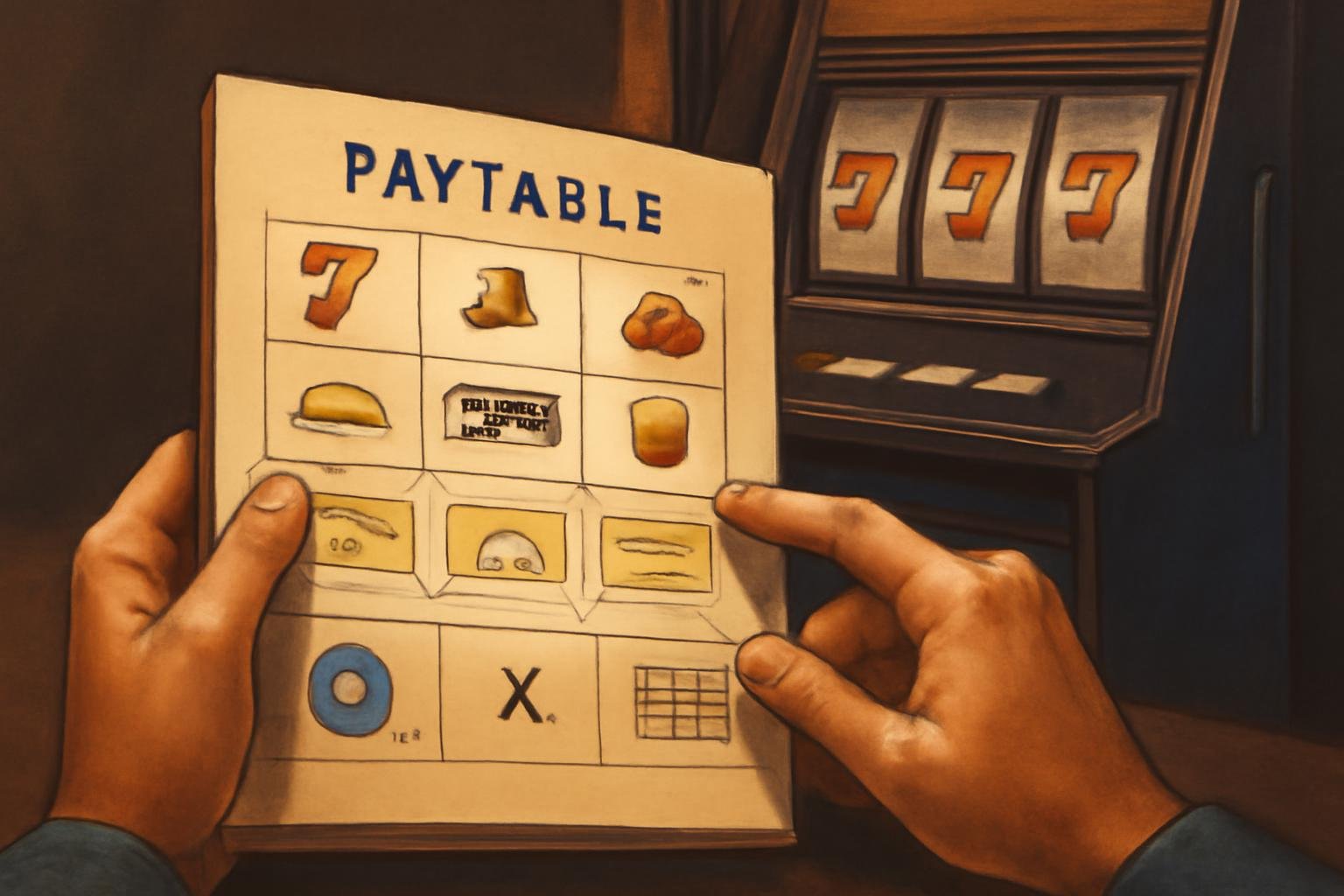
A slot’s paytable is its rulebook: it explains which symbols can pay, how winning combinations are counted, and what special features do. Taking a moment to read it can prevent confusion about a result or an unexpected feature. It cannot tell you what will happen on a spin, but it can help you understand the game before staking money.
Paytables differ from one game to another, so do not assume that rules from a familiar slot apply to a new one. Open the information panel and work through these sections before choosing a bet.
Start with the symbol values
Most paytables show symbols alongside the awards for combinations. A game may list different values for matching symbols on a payline, or describe wins in another way. Check the wording carefully: the displayed award might depend on your total bet, a coin value, the number of symbols, or another setting described by the game.
Symbols are often grouped into ordinary symbols and special symbols, but their labels and functions are game-specific. Look for notes beside the payout chart, including whether a listed combination must appear on a particular line or in a particular position. If the game has several symbol sets or themes, make sure you are reading the values for the game currently open. A slot’s presentation can be engaging, but the rules—not the artwork—explain how a result is evaluated. For more on how presentation and game mechanics differ, see how nature-inspired themes shape slot atmospheres.
Find out how wins are counted
The paytable or help screen should explain the game’s win method. Traditional paylines may require matching symbols along marked paths. Some games allow wins in either direction, while others use a different arrangement. Games that describe “ways to win” or another system may not use fixed lines at all.
Check whether the number of lines or other win settings can be changed. If so, find out how that affects the total stake and whether the game requires particular settings for a feature to be available. Do not assume that selecting more lines is automatically better; it can change how much you wager per spin. The relevant question is whether you understand the configuration and are comfortable with its cost.
Read the special-symbol rules
Wilds, scatters, bonus symbols, and multipliers can have different jobs. A wild might substitute for certain symbols, but the rules may exclude some combinations. A scatter might trigger a feature in specific positions, while a bonus symbol could require a particular number to appear. These are examples of common terms, not guarantees that every game uses them in the same way.
Look for details such as:
- Which symbols a wild can replace, and whether it can appear in every reel or position.
- What combination or count activates a bonus feature.
- Whether a feature has its own rules, stake requirements, or choices.
- Whether special symbols can combine with ordinary payline wins.
If a feature’s instructions are unclear, use the game’s information panel or help materials rather than guessing. A feature’s name or animation does not explain its exact conditions.
Understand RTP and volatility in context
Some paytables or game-information panels also display return to player (RTP) and volatility information. RTP is a theoretical measure of how a game is designed to return wagers across a very large number of plays; it does not predict what one person will receive in a short session. Volatility describes the general pattern of prize frequency and size, though labels and explanations can vary. Neither measure tells you whether a particular spin will win.
These terms are useful background, not a way to identify a guaranteed outcome. For a fuller explanation of how RTP and theme serve different purposes, read the discussion of RTP versus slot themes.
Check the bet controls before spinning
Before playing, identify the displayed total stake for each spin and see how it changes when you adjust the controls. Confirm that the currency, bet size, and any selected options are clear. A button that changes a stake or starts a feature should not be pressed until you understand what it does.
If you are new to slots, a basic overview of beginner-friendly casino games can help explain how to approach unfamiliar rules. You can also choose not to play a game if its instructions remain confusing.
A quick pre-play checklist
- Can you explain what counts as a win in this game?
- Have you checked the value chart and the conditions for special features?
- Do you know the total cost of each spin at your selected settings?
- Are you treating RTP and volatility as descriptions, not predictions?
A paytable is most useful when read before the first spin, not after a surprising result. If the rules are clear and the planned stake fits your entertainment budget, you can make an informed choice about whether to continue. If not, pause or pick a game with instructions you can readily understand.